El Ruido (“The Noise”)
El Ruido is a surreal text-based telenovela noir about a villainess who isn't supposed to go off script with 11 different endings. I submitted this game for the 2026 Interactive Fiction Competition.
Genre: Sci-Fi/Surreal/Noir
Platform: Browser
Team Size: 1 (Solo dev, plus worked with an artist for the cover art)
Timeline: 24 days
Engine & Tools: Texture, Figma
My Contributions: Narrative Branching, Creating and Tracking Variables, Narrative Design, Creative Direction
Play online
About the Game and Restrictions
I was one of the 8 writers to be selected out of 59 applications to join an Interactive Fiction Writing Circle in the Work with Indies Discord. The goal was to create a finished text-based game to enter into the 2026 Interactive Fiction Competition (IFComp). We met weekly in August on Discord to get feedback on our work.
The writing group had to use Texture to create their stories. Texture is a no-coding interactive fiction writing tool that allows players to drag and drop words onto specific highlighted text on the page to progress the story and branch paths.
Understanding Texture’s Constraints Before Brainstorming
Before even starting to ideate, I wanted to understand Texture’s constraints and think about what kinds of stories could benefit from the drag and drop interaction mechanic.
Texture was a pretty basic tool with limited features. I tried to use all of the tool’s mechanics to tell my story, including:
Using verbs to reveal more information before making a branching narrative decision, like an ‘inspect’ option
Using verbs to progress the story and branching narrative
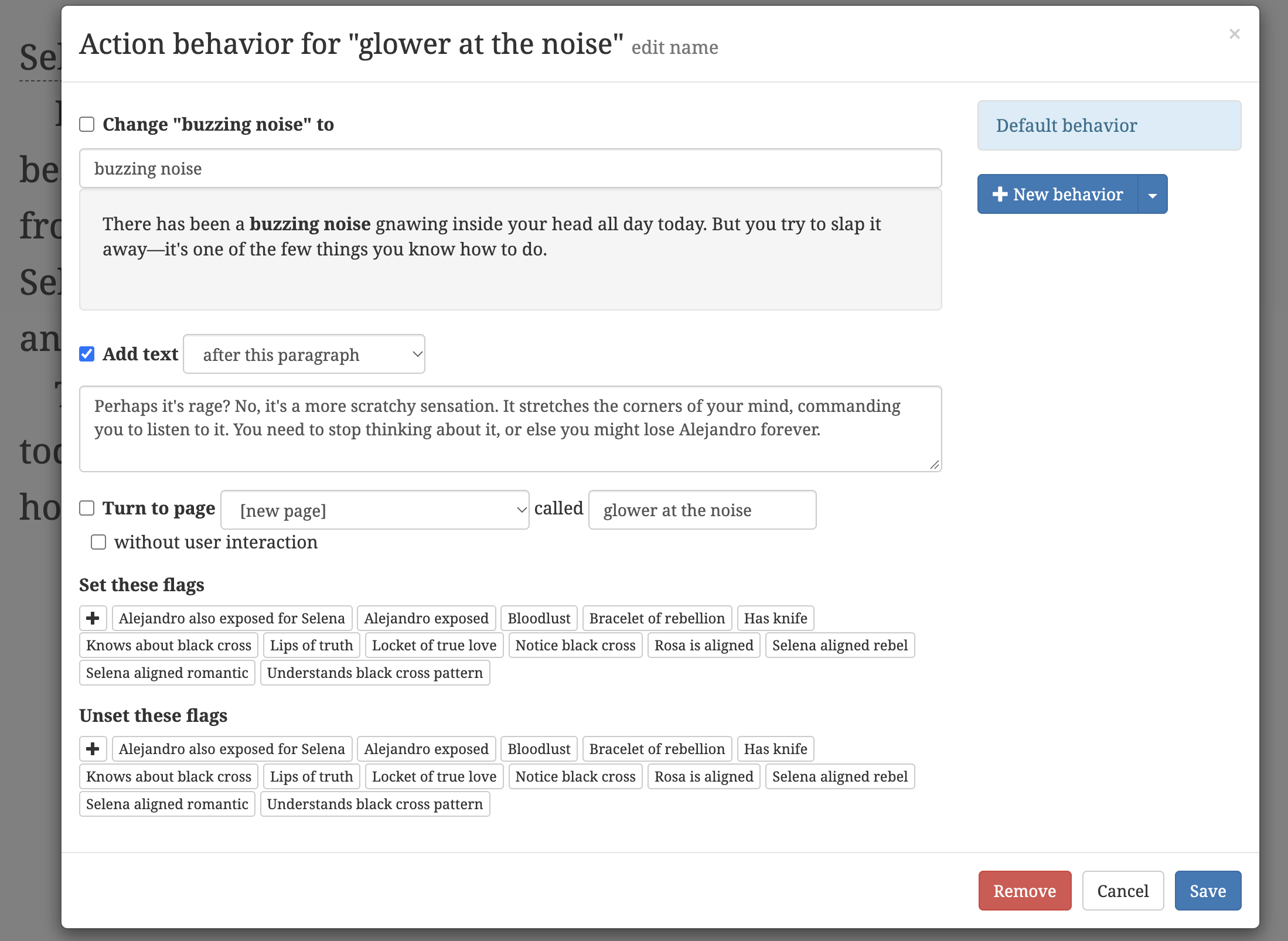
Using Texture’s flags feature as variables to track what the player has done or collected—and only allow certain situations to happen if specific variables were met (ie. if/then statements)
Using the drag and drop interaction to transform words or phrases to reveal the opinions and emotions of the player character. Those transformations would be different depending on the variables and branching path.
The image shows all the flags I used in the game.
Ideas and Brainstorming
I did some competitive research to see what genres performed well in previous competitions. Sci-Fi, Mystery, and High Fantasy consistently ranked the highest—but no Texture game has ever made it to the top 10 rankings.
While I had brainstormed a couple Dungeons & Dragons-adjacent ideas, what I was most excited to write about was completely different: a telenovela, or Latinx soap opera. Nobody had written this premise for the competition before.
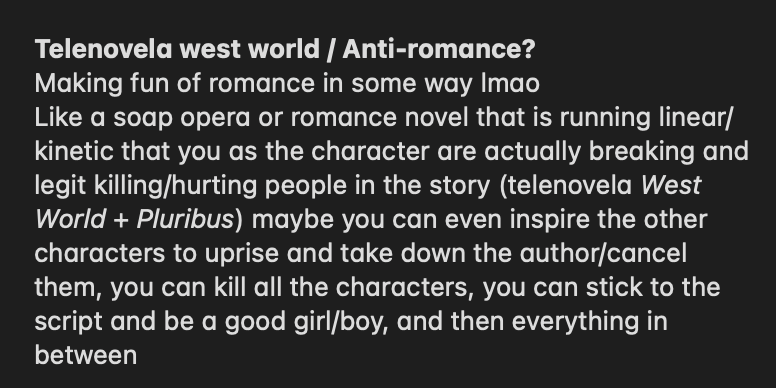
I started riffing on the telenovela idea and combined some sci-fi inspiration from Westworld and Apple TV’s Pluribus to make it more mysterious.
What if the female leads in a telenovela realized they were living a simulation and that they were just caricatures to serve mens’ gratification? How might the player break free from these stereotypes—or, should they go along with the script set out for them?
Inspiration and Themes from Telenovelas
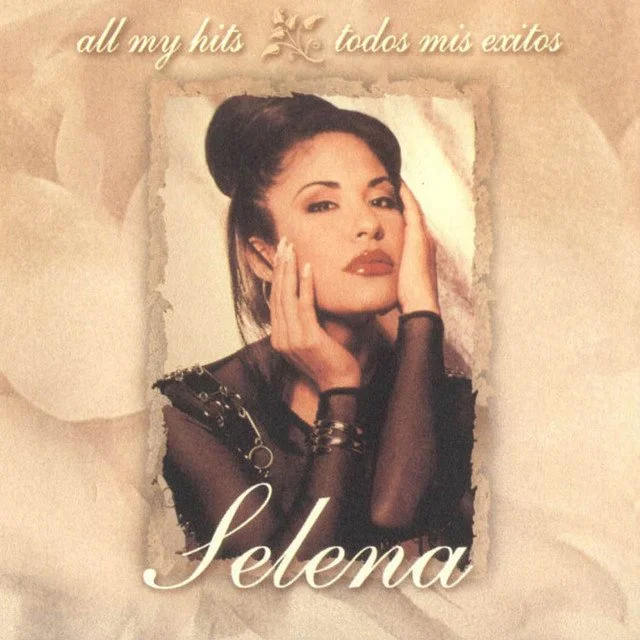
Being half-Mexican, I grew up listening to Selena Quintanilla’s music about forbidden love in almost every car ride. I’d also occasionally watch a telenovela episode on the Telemundo channel to practice my Spanish while in middle school and high school. Telenovelas are full of drama, scandal, and power. Everything is taken to the top to where it’s campy and comical (and ripe for meme territory).
They’re also extremely stereotypical in perpetuating the “fiery Latina” or “Jezebel” femme fatale type, colorist in that they tend to cast light-skinned actors in the desirable roles, and are misogynist in that women are always fighting for a man’s love and attention. Marriage means success, especially in traditional Mexican values and culture.
But I wanted to push on this conversation more. I argue there’s a triangulation of desire between the two women and the galán, or handsome man. The main villainess almost ‘desires’ the matronly main character because she wants to be her, to be loved by the man they’re competing for.
I also wanted to add a new perspective to the telenovela genre: my main character would be the villainess and not the angelic girl, who is usually the main character in soap operas and who we tend to root for. I wanted to add a different perspective and give the antagonist a chance to play out her script, get revenge…or reclaim herself.
I wanted to interpret telenovelas from both a queer and feminist lens. I’d emulate this over-the-top drama while also balancing these topics of misogyny with a layer of mystery…all while getting to explore a part of my mixed identity!
Plotting Out The Story and Branching Narrative
My story would focus around four main characters that are tropes in every telenovela: the villainess and jealous rival (our main character); the matronly woman who is usually from a low-income background; the galán, or (supposedly) handsome man the two women are devoted to; and an abuela, or elderly woman who is a religious caretaker.
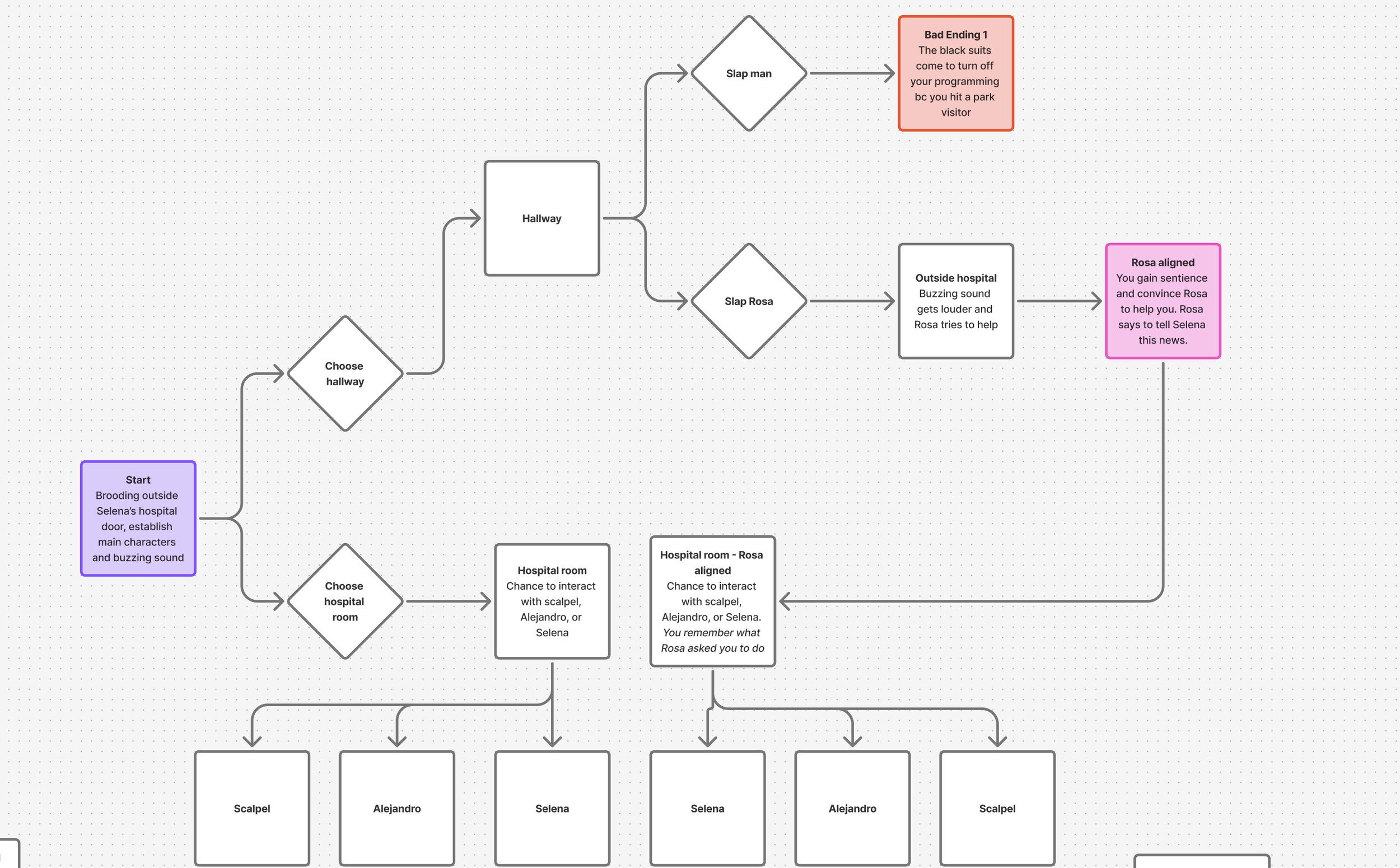
I wrote the opening scene without planning and I already decided that the first major branching point in the narrative would be to either barge into the hospital room and confront the matronly woman (which is what a villainess would usually would do), or go cool off in a hallway.
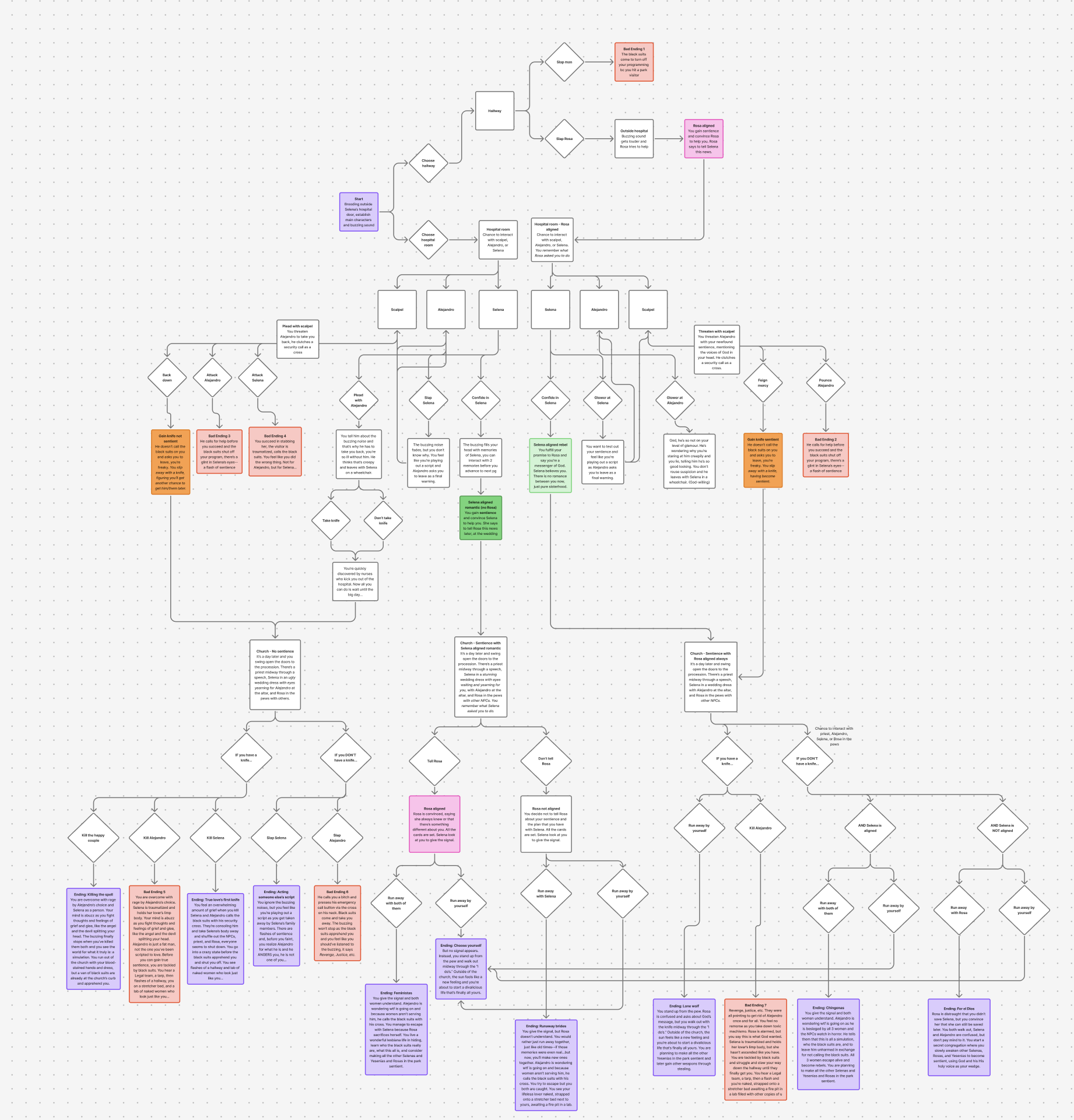
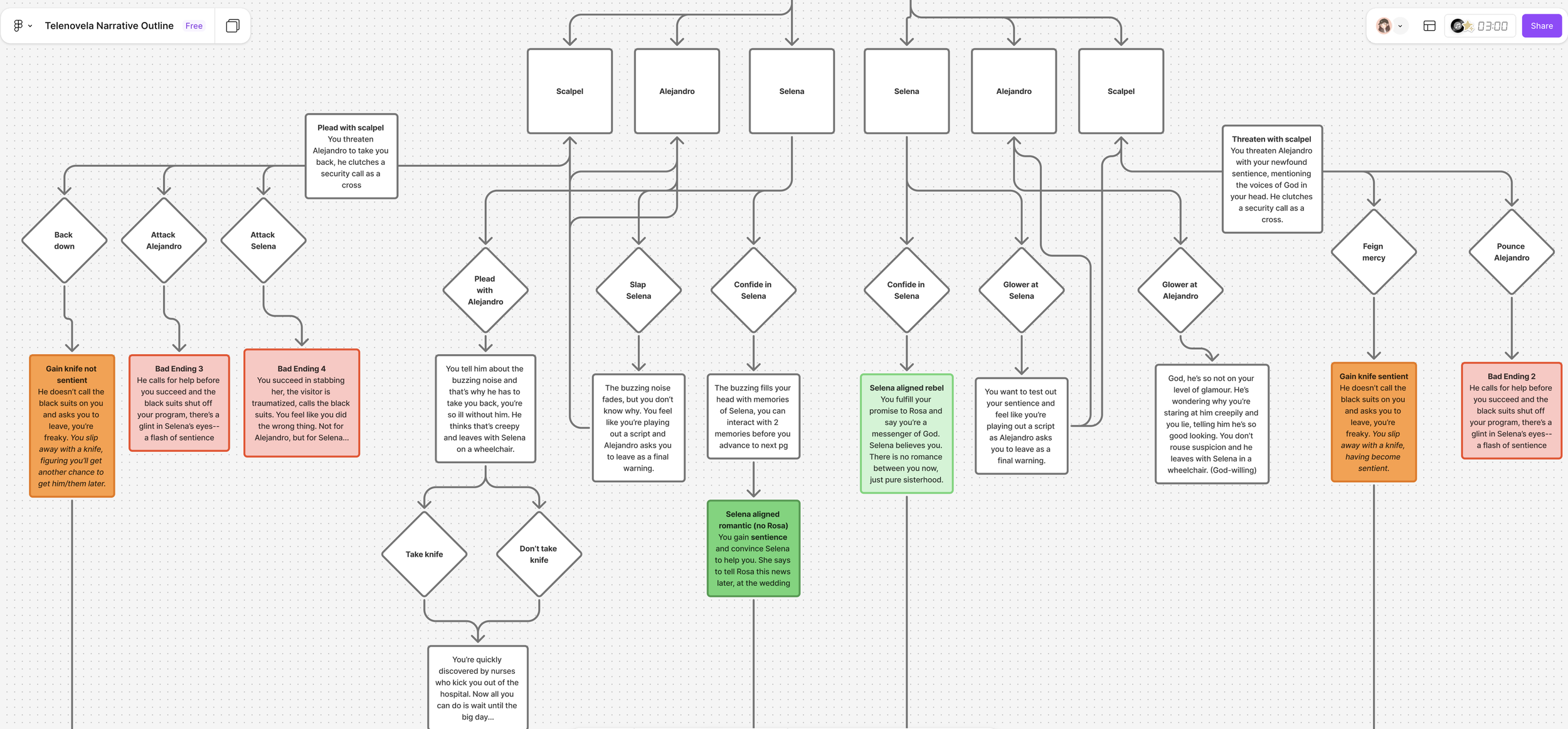
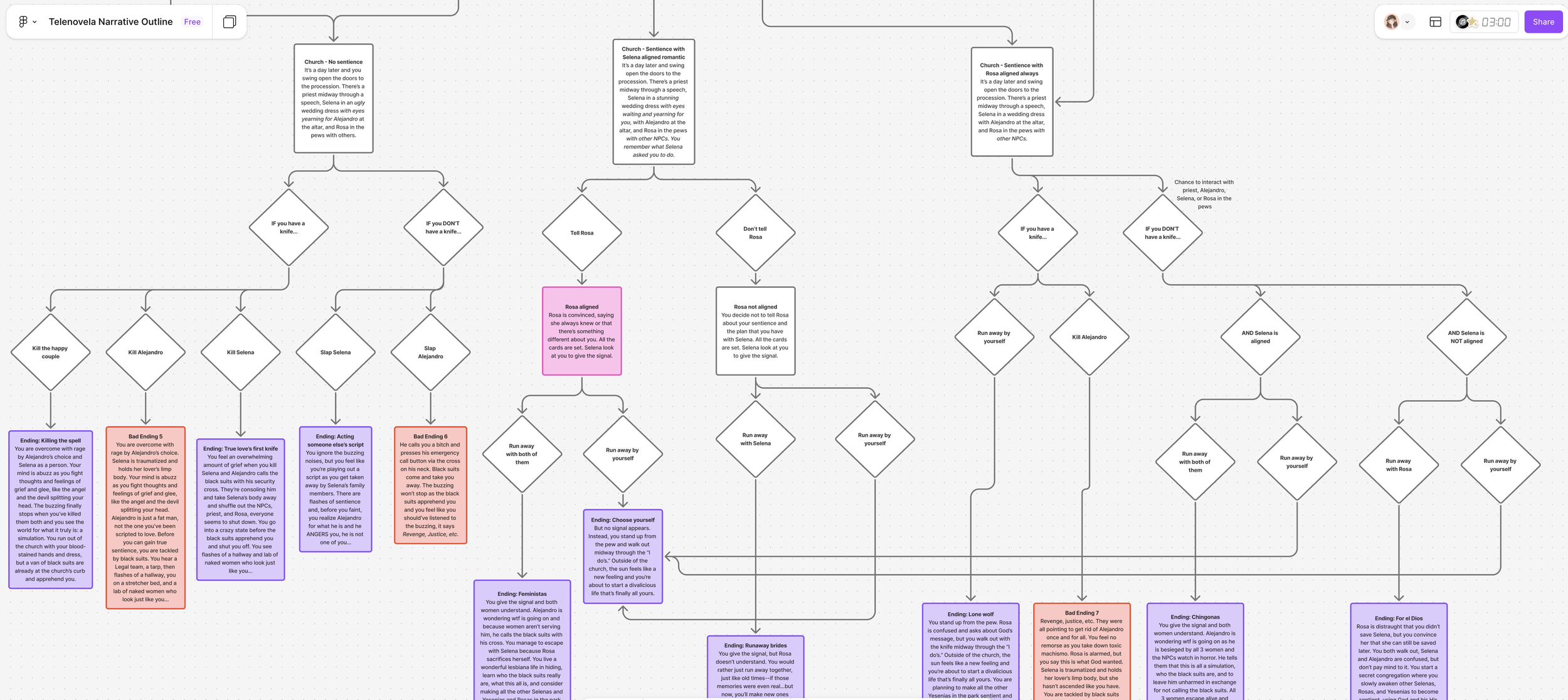
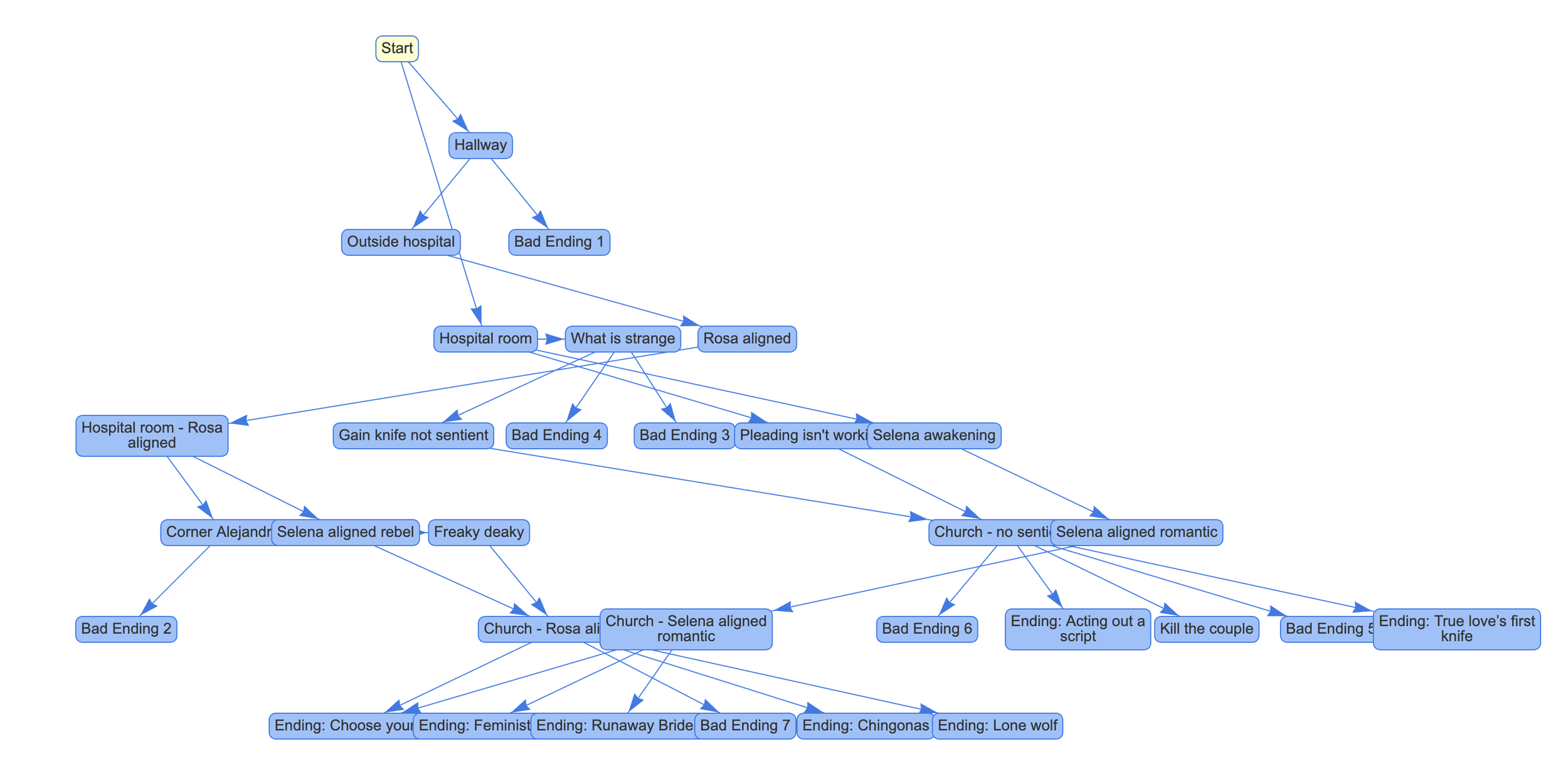
Before venturing too far off without a plan, I decided to plot out the main story beats and branching narrative paths in Figjam. I also marked opportunities to create variables that would affect the story.
I had about 15 endings in my draft, but I was able to consolidate them and reduce it to 11 endings. But I knew that I’d have to make each ending distinct enough and believable, while also maintaining some level of consistency.
Feedback from the Writer’s Circle
Being more maximalist in the language
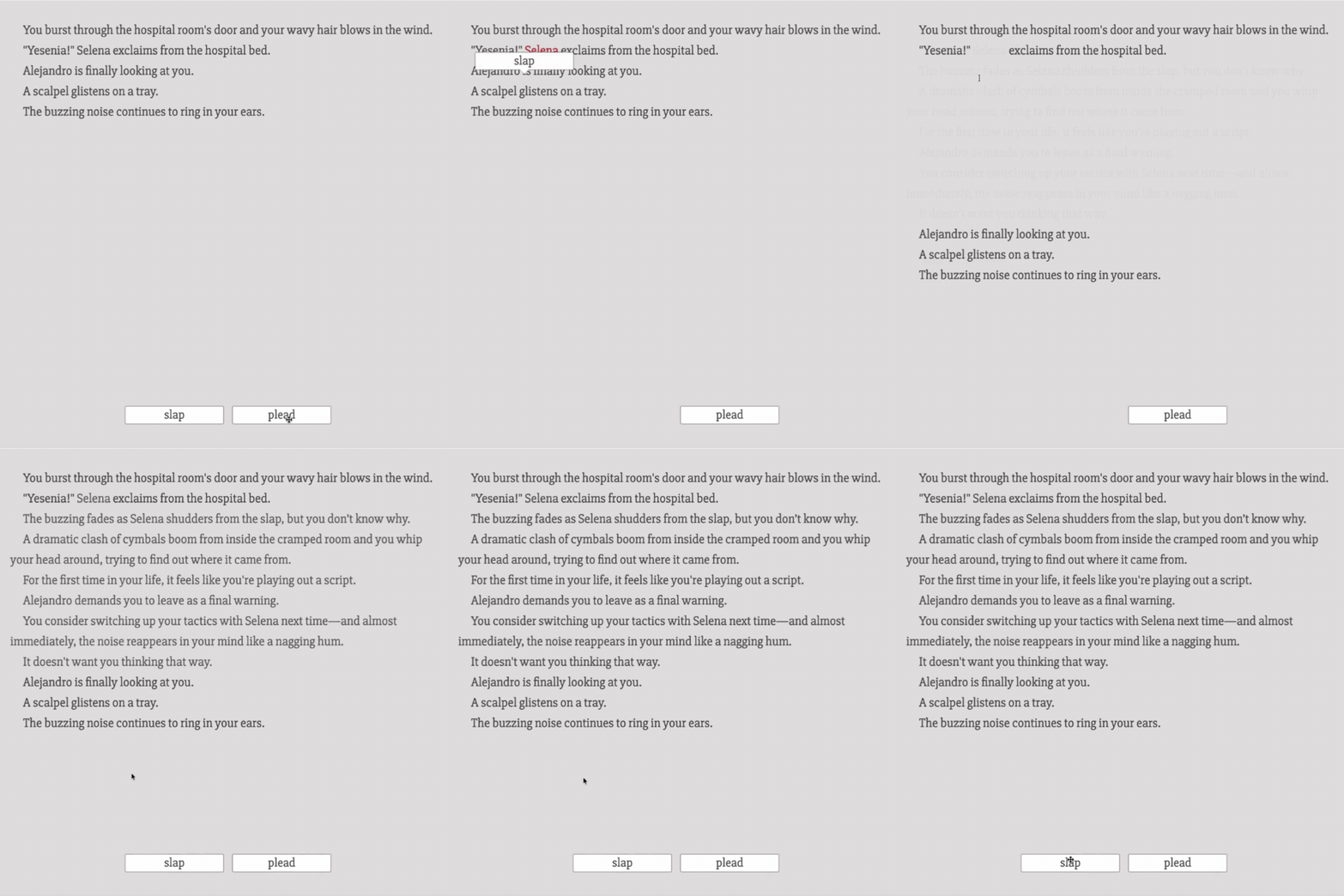
Some early feedback I’d gotten in the writing circles helped shape my writing style for the rest of this project. In the hospital room scene, my draft opened with the line: ”You barge through the hospitaldoor with elegant style.A fellow writer suggested I be more maximalist in the language, just like telenovelas. What else could imply “elegant style,” like her hair blowing in the wind for some random reason, or the sound of her stilettos to show that elegance and style?
I thought it was great advice and I added more maximalist elements into my language, while being conscious not to totally bog down the player in adjectives and adverbs that every sentence would feel like a struggle.
The final line became: “You burst through the hospital room’s door and your wavy hair blows in the wind.”
You can also see maximalism represented in my verb choices: slap, glower, menace. These verbs not only emulate what actually happens in a telenovela, but also showcases the flair our villainess Yessenia embodies.
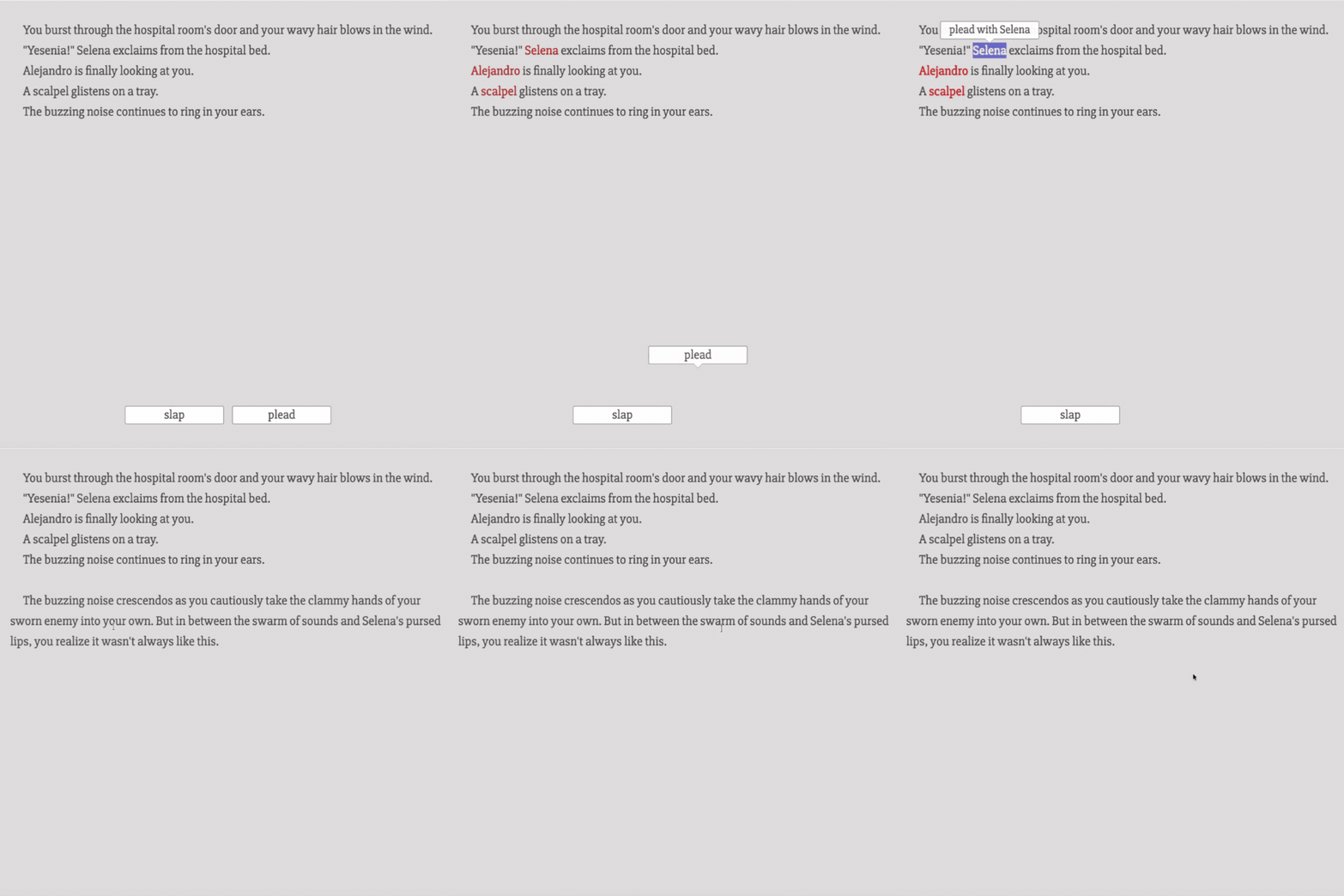
Another way I was maximalist was in writing out sounds.
Because this was strictly a text-based game, I had to describe dramatic sound effects that would accentuate a high-stakes moments, like when Yesenia decides to go off-script and confide in Selena, or the church organ sounds at the wedding.
These moments ended up being comical, just like in the soap operas.
Depending on whether you freed Yesenia from the confines of her programming would determine whether Yesenia notices how random the sound effect is, or if she thrives in it because the sounds represent her emotions in that moment.
Creating and Tracking Variables
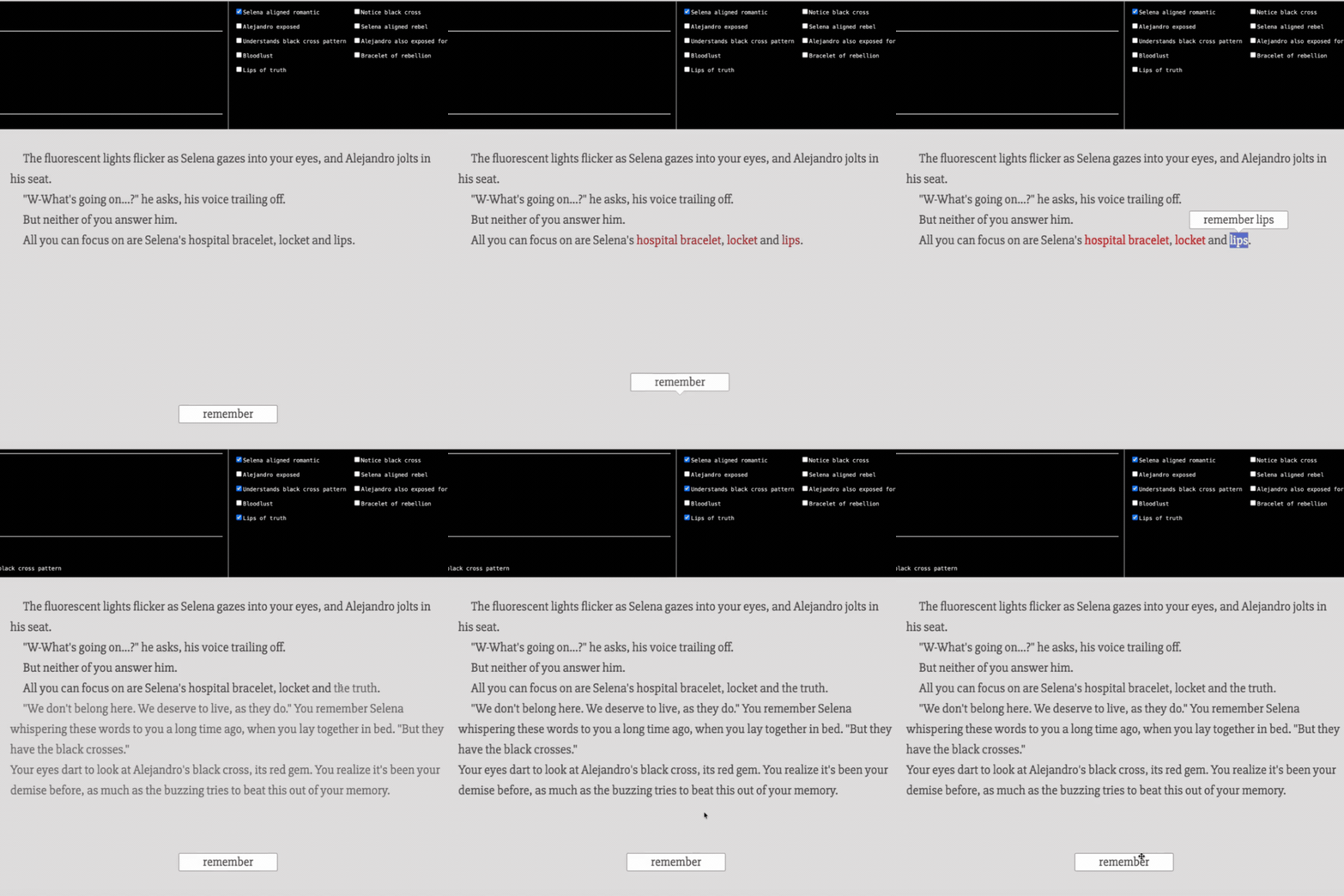
I created a couple variables and if/then statements for the game.
Key variables were:
Having a scalpel vs. not having a scalpel. Snatching the scalpel in the hospital allows for more violent endings.
Confiding in Selena, Rosa, or both of them. The number of women you could help ‘awaken’ from their programming also affected certain endings, like a romance path for just Selena, a devout path with just Rosa, or a feminist ending if the player took the time to awaken both women.
Understanding the meaning of the black crosses. If the player was successful in noticing that all the men in the story have black crosses, our main character would be able to see Alejandro Galán for what he truly was: just an amusement park-goer.
If you didn’t choose to awaken Selena, then Rosa would refuse to help you. True to her religious character, the elderly woman would not help you unless you tell Selena about your plans to rebel and escape.
Texture’s preview ability exposes the variables and logic you set on each page, which made play testing and beta reading easier to make sure each variable was tracked correctly and going to the correct branch.
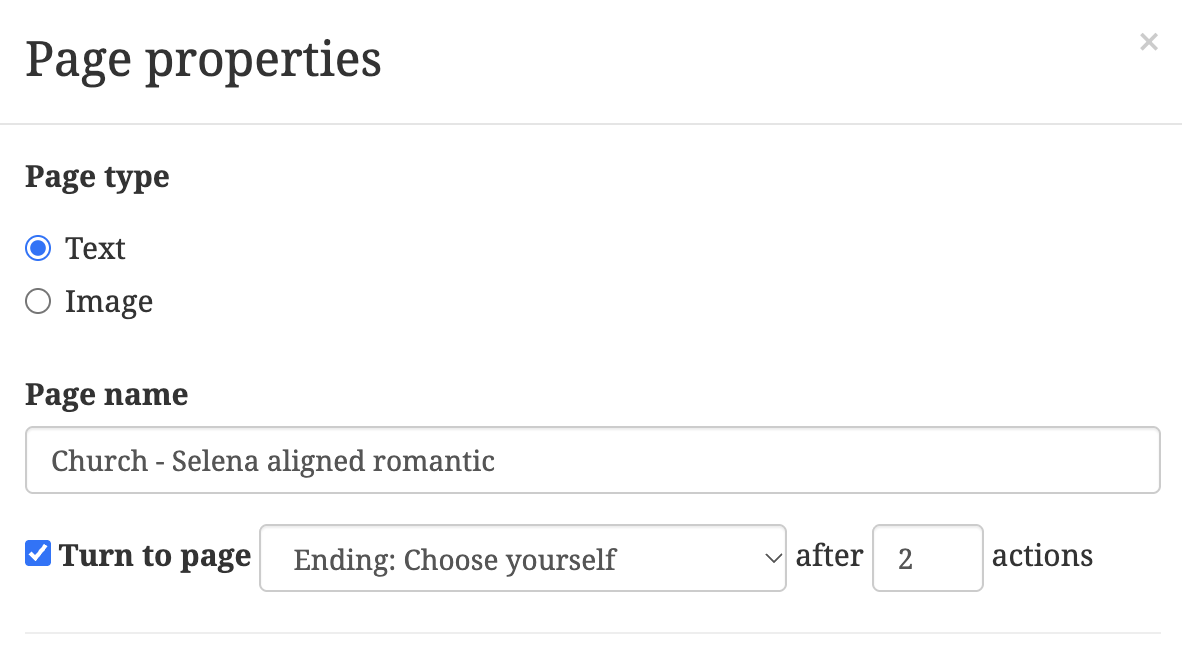
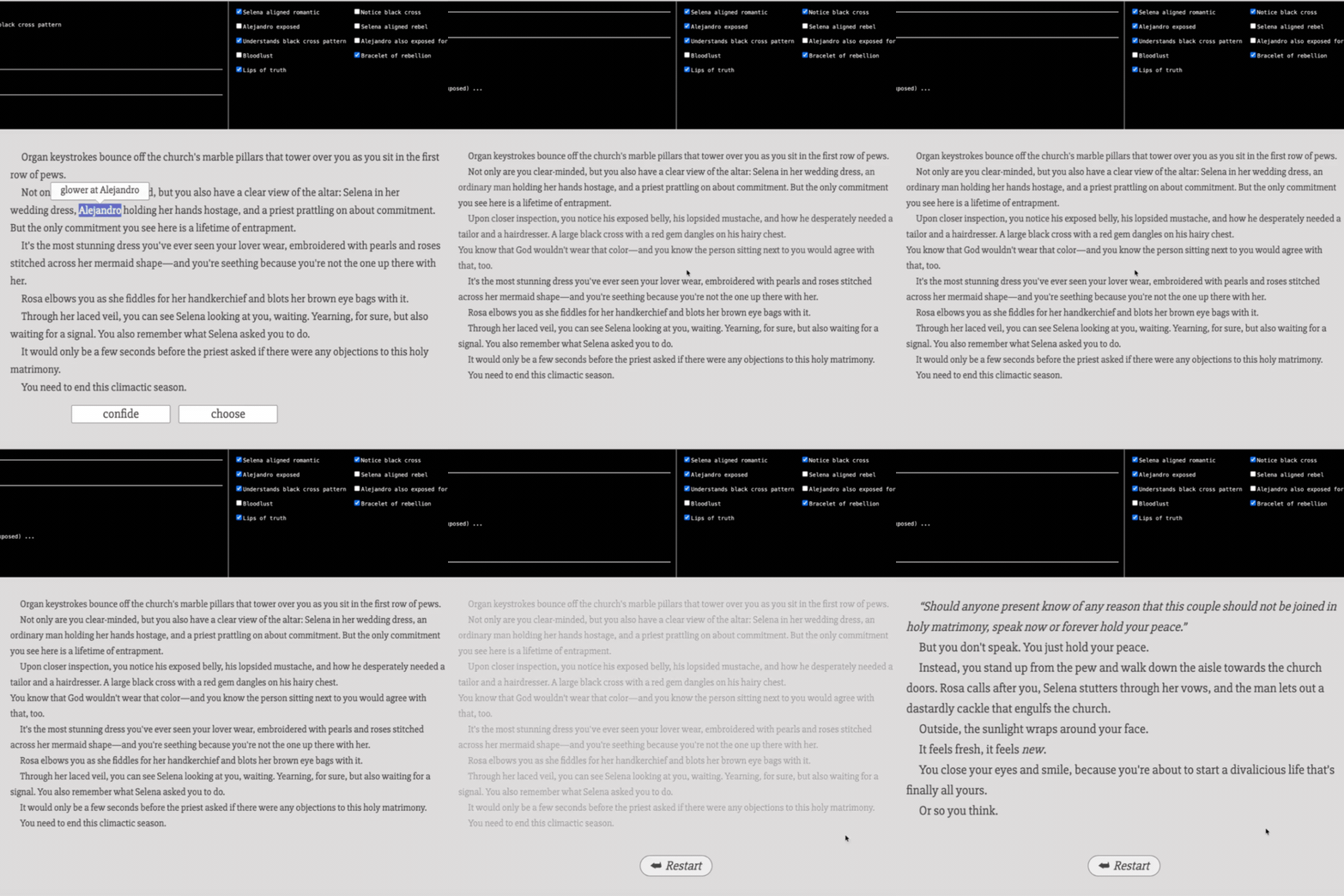
I was also able to use a countdown mechanic in Texture
This allowed me to automatically advance the story after X amount of player interactions.
To increase the sense of urgency and severity in making a choice at the wedding as vows were being made, I limited the amount of actions a player could take at the wedding to 2 before automatically sending them to a specific ending that was usually about Yessenia choosing herself and walking out of the wedding.
I Also Worked With an Artist for the Cover Art
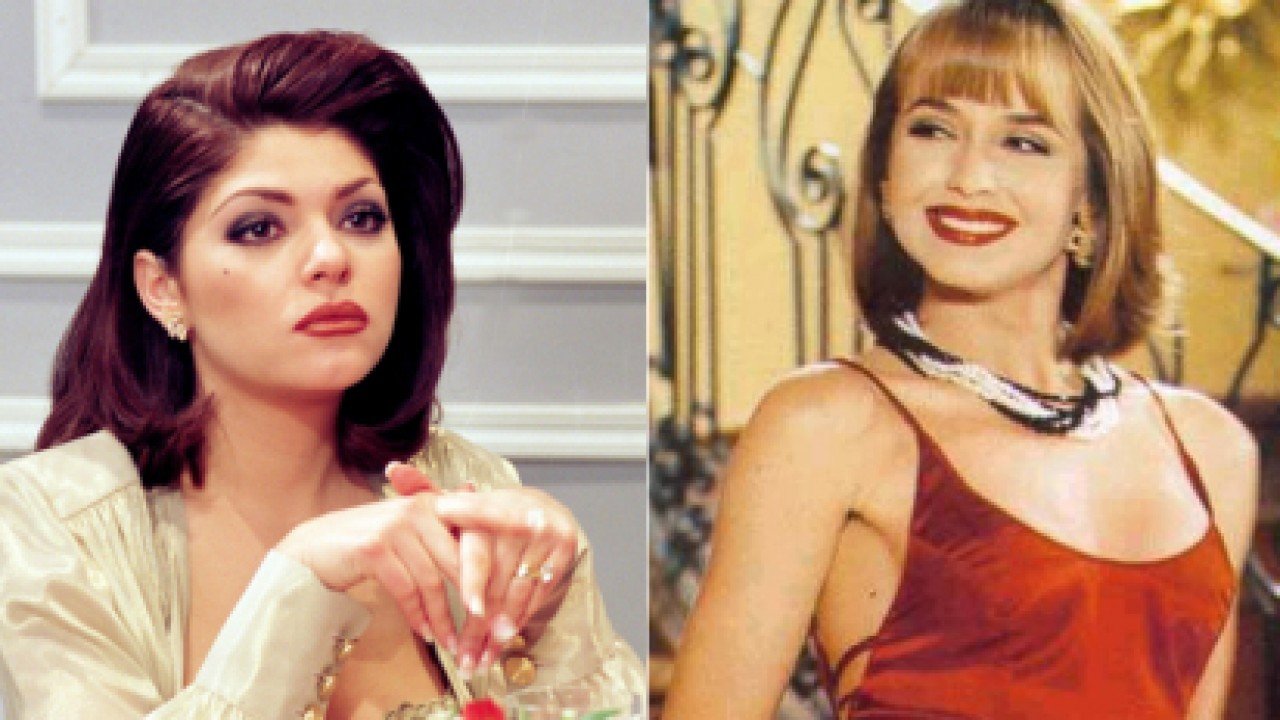
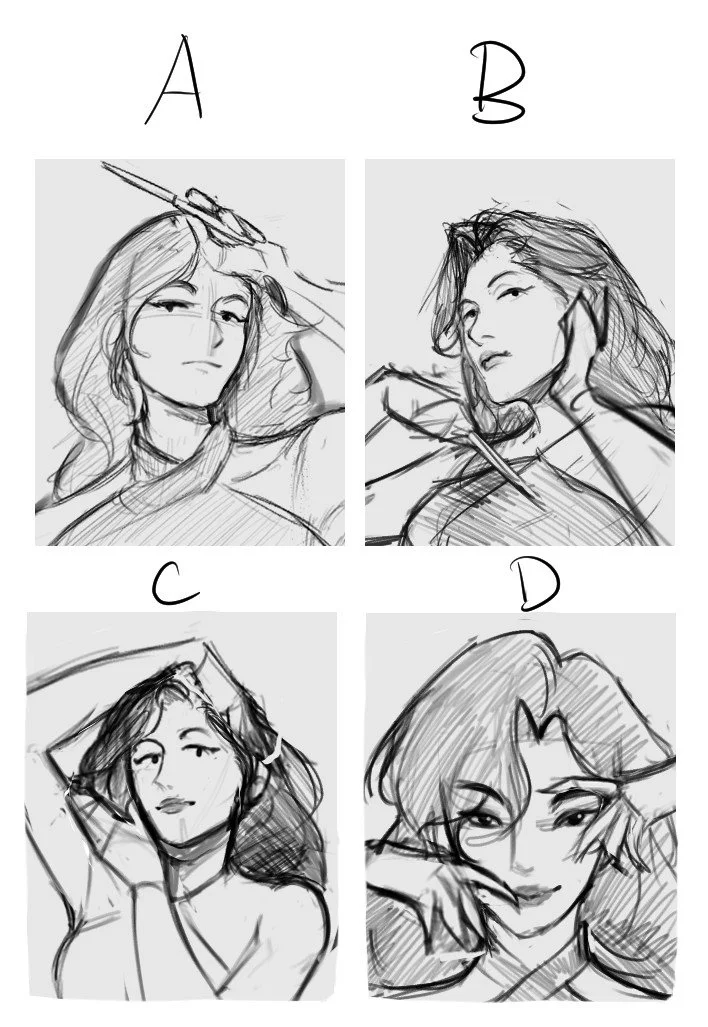
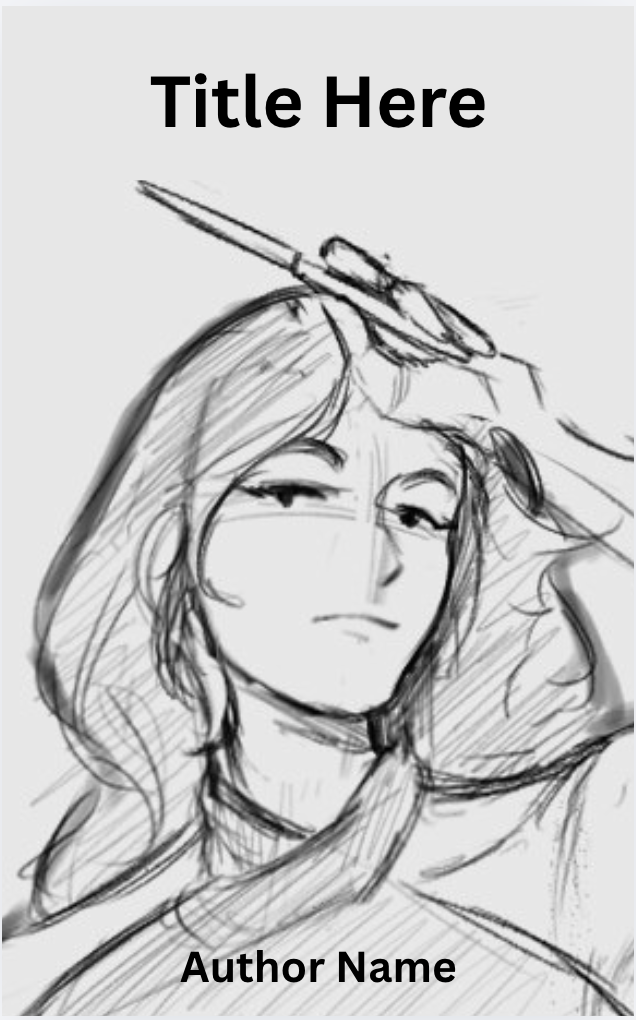
I knew I wanted the cover art to feature the main character, who was a villainess. So I created a moodboard with proposed hair style, skin tone, outfits and potential poses for the artist to sketch out in thumbnails. I drew a lot of inspiration from iconic telenovela rivals like Gabriela Spanic from La Usurpadora and Soraya Montenegro from María la del Barrio.
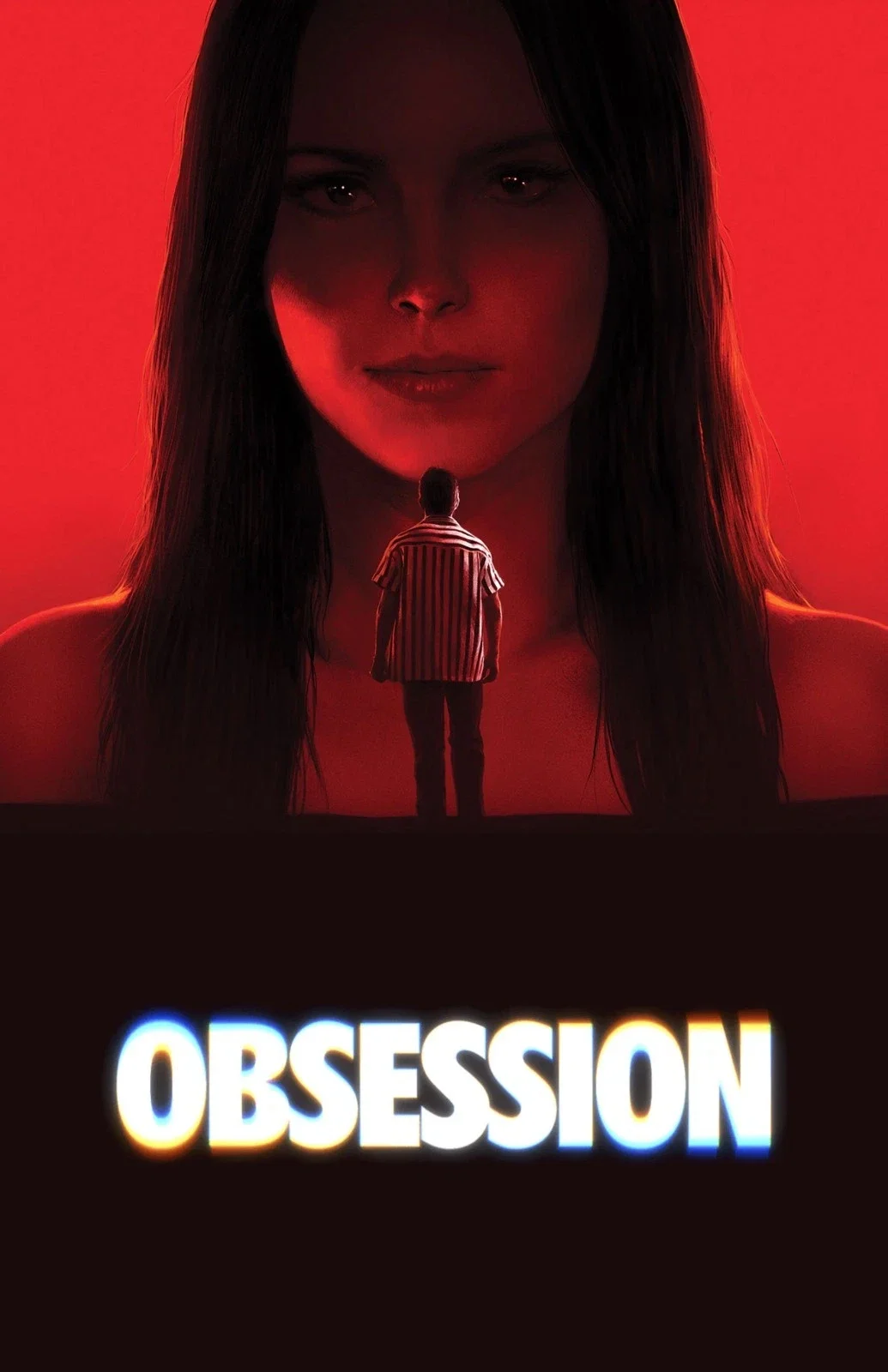
For color scheme, I was really inspired by the recent movie Obsession (2026) and loved the striking black and red color scheme and bold font in their movie posters.
Creative Direction, Inspiration, and Context
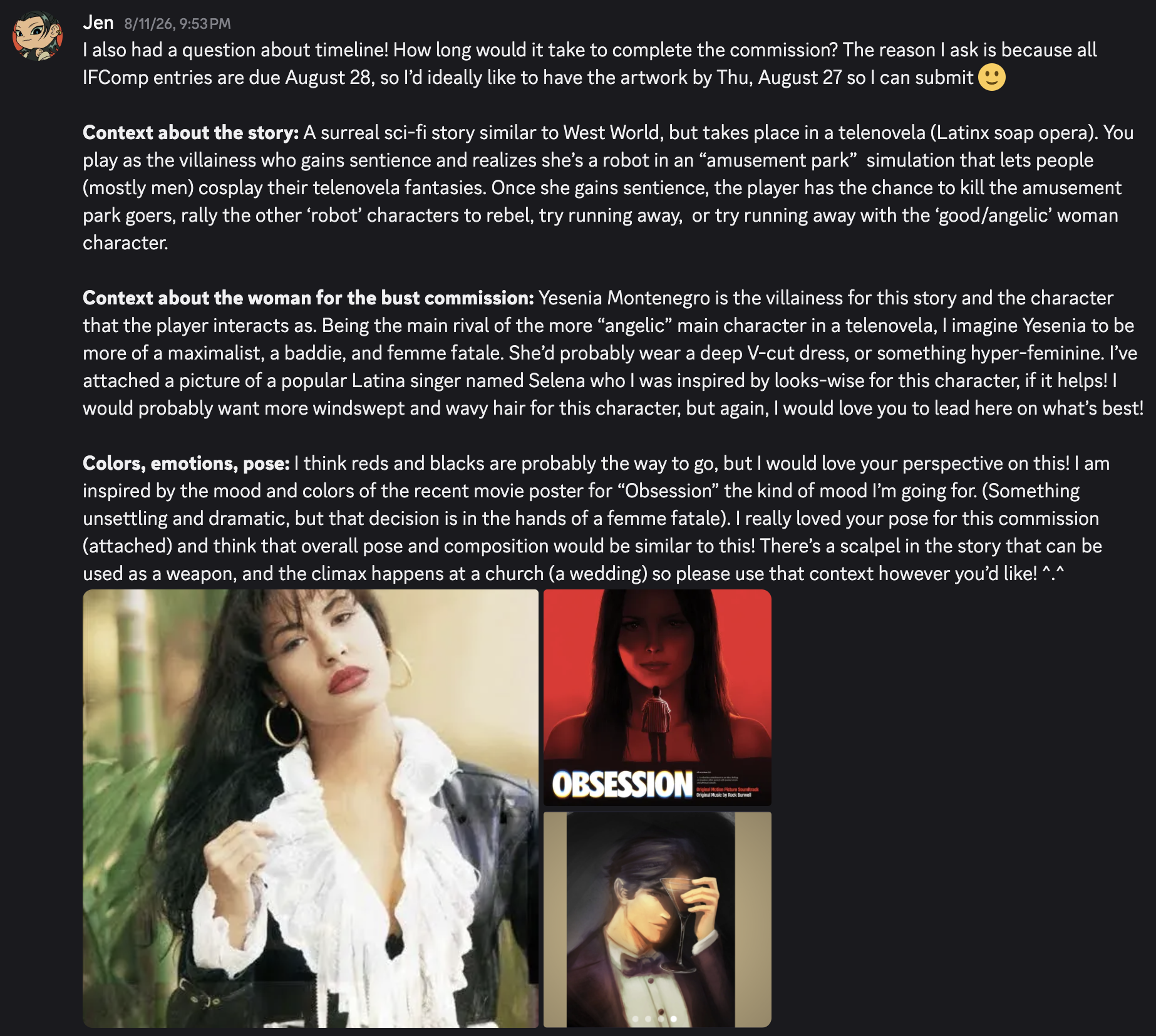
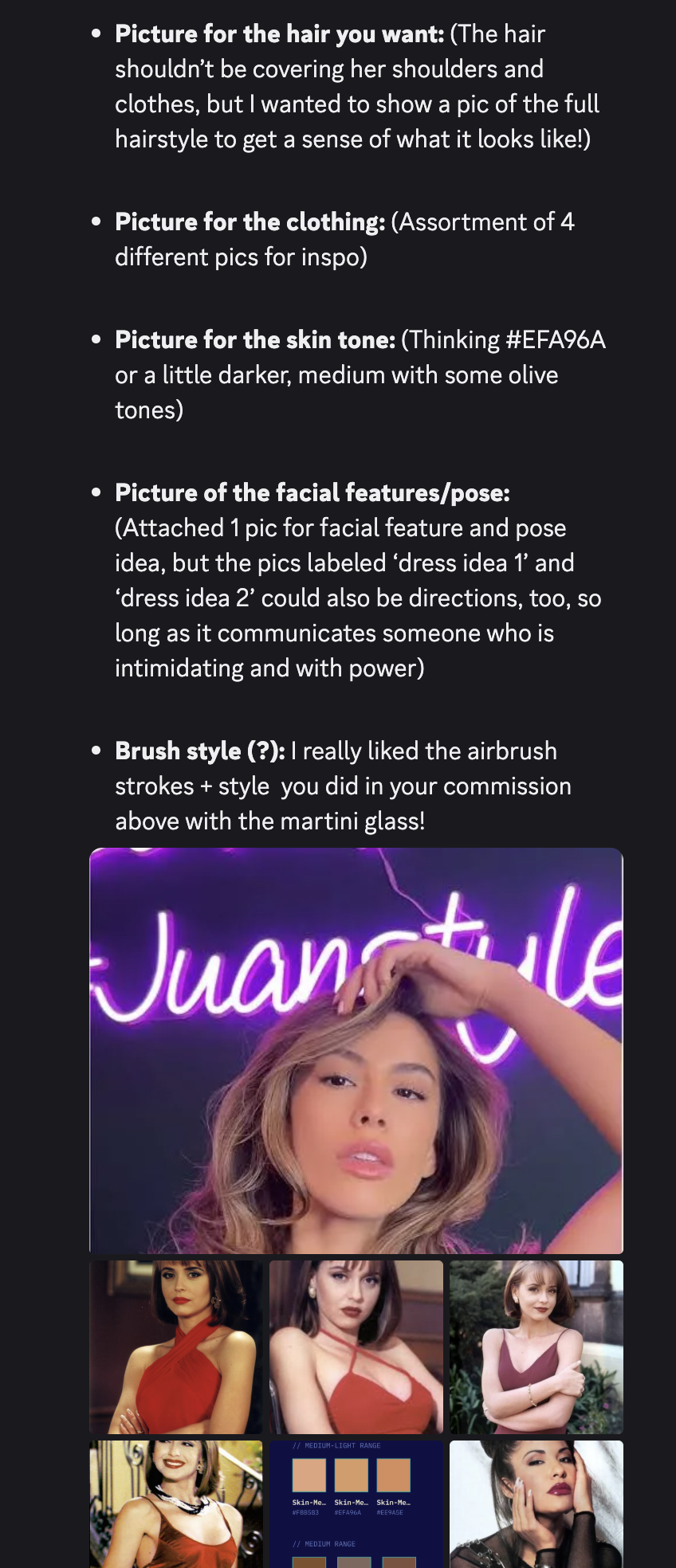
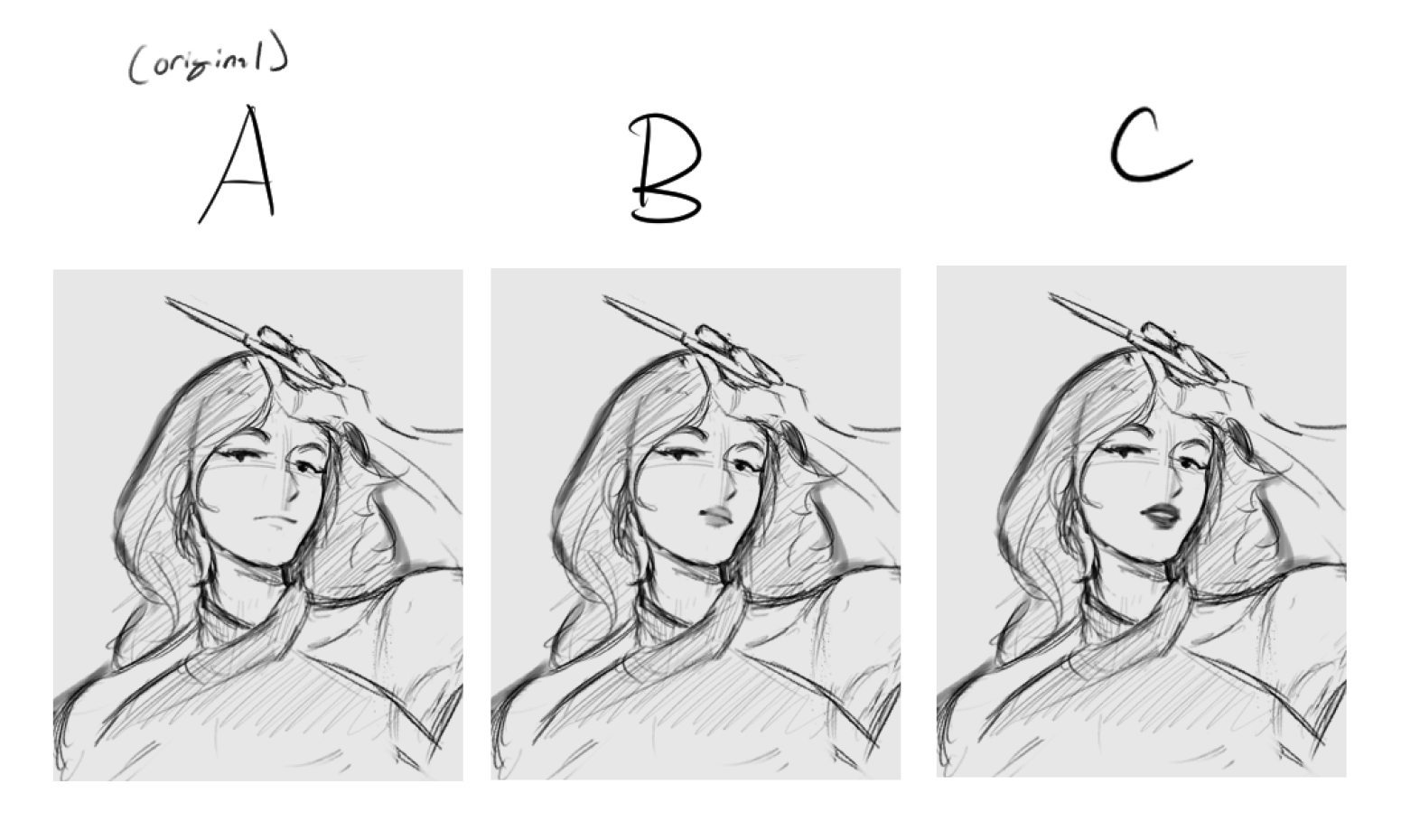
Thumbnails, Lip Explorations, and Line Art
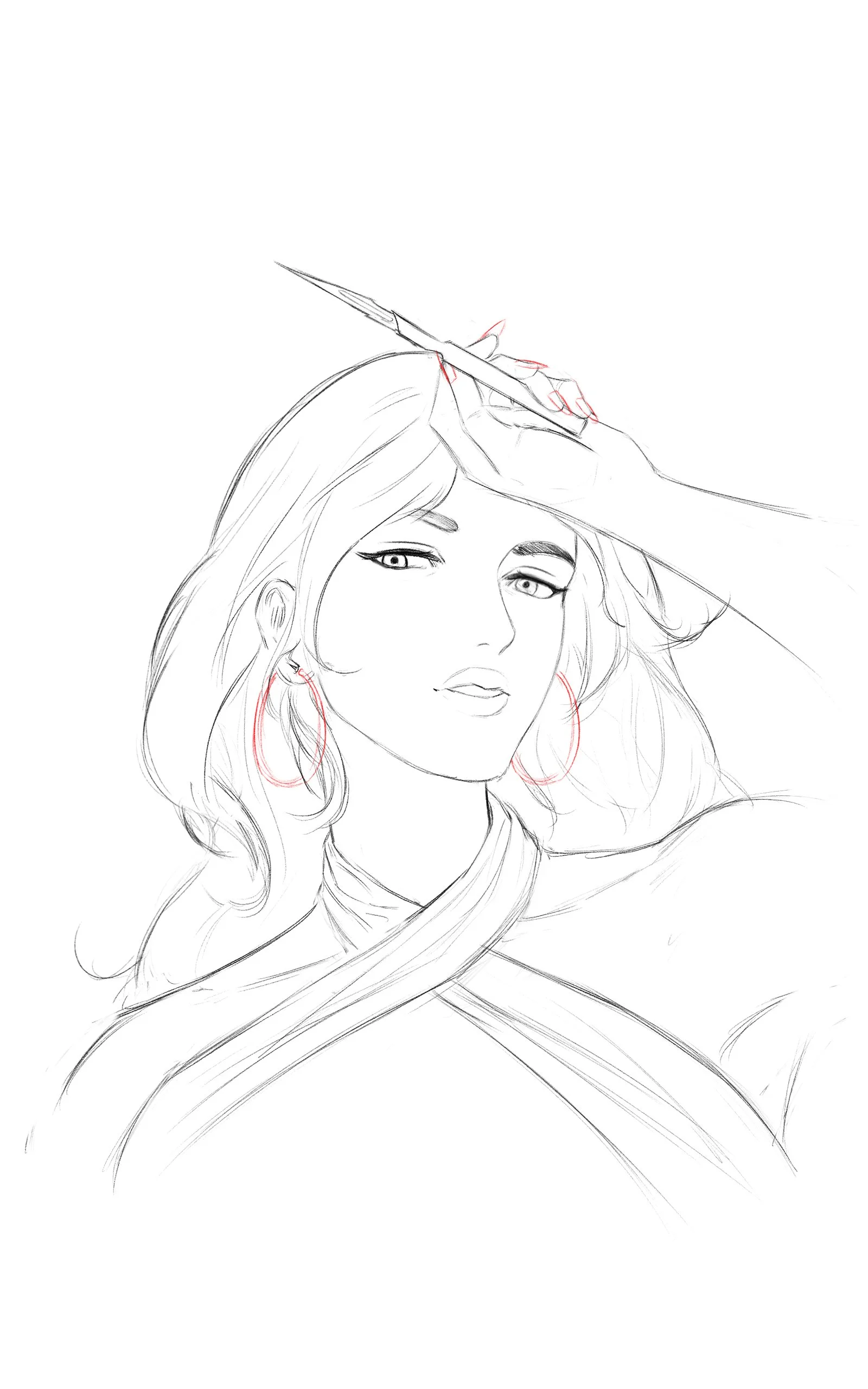
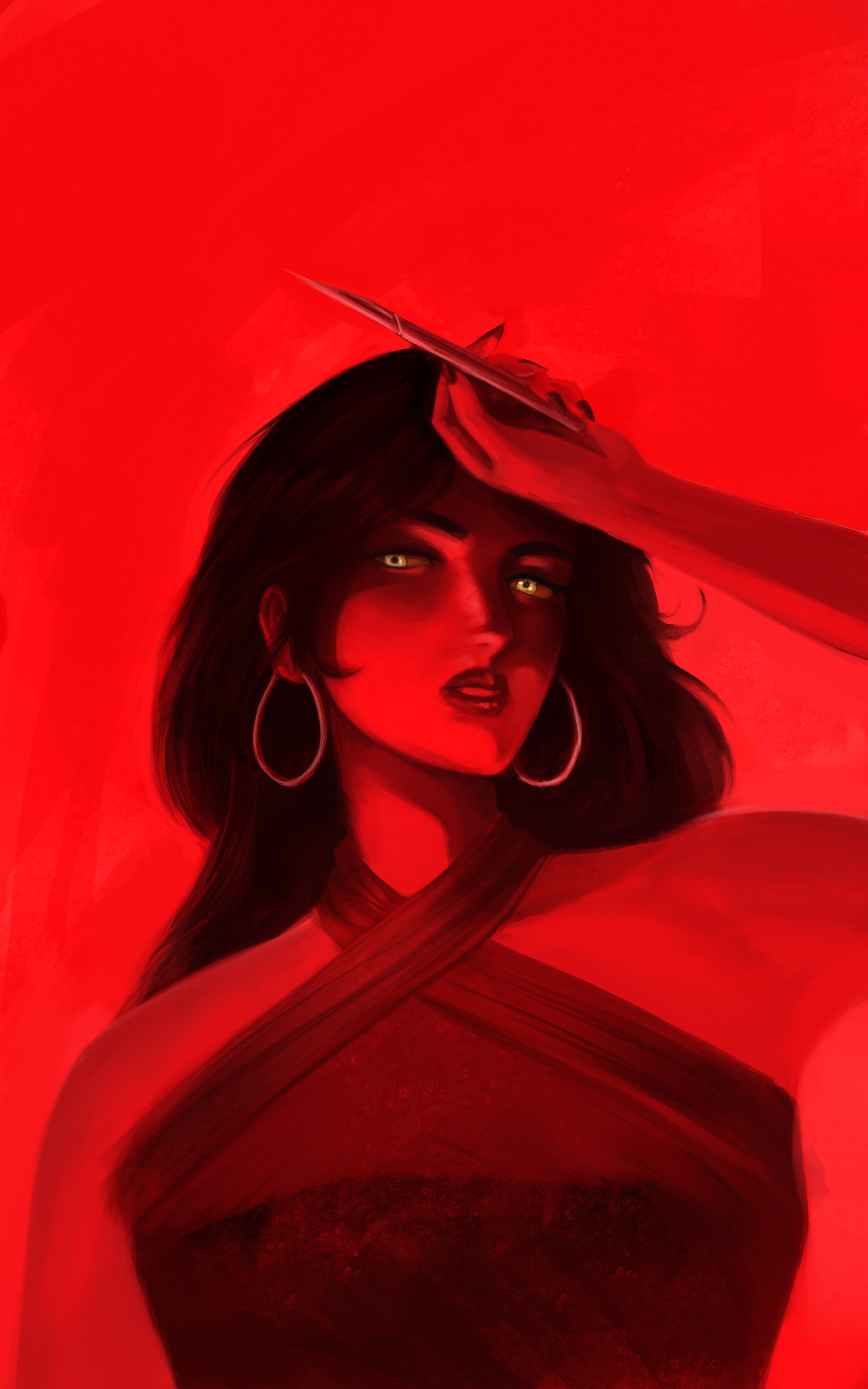
Color Directions and Final Art
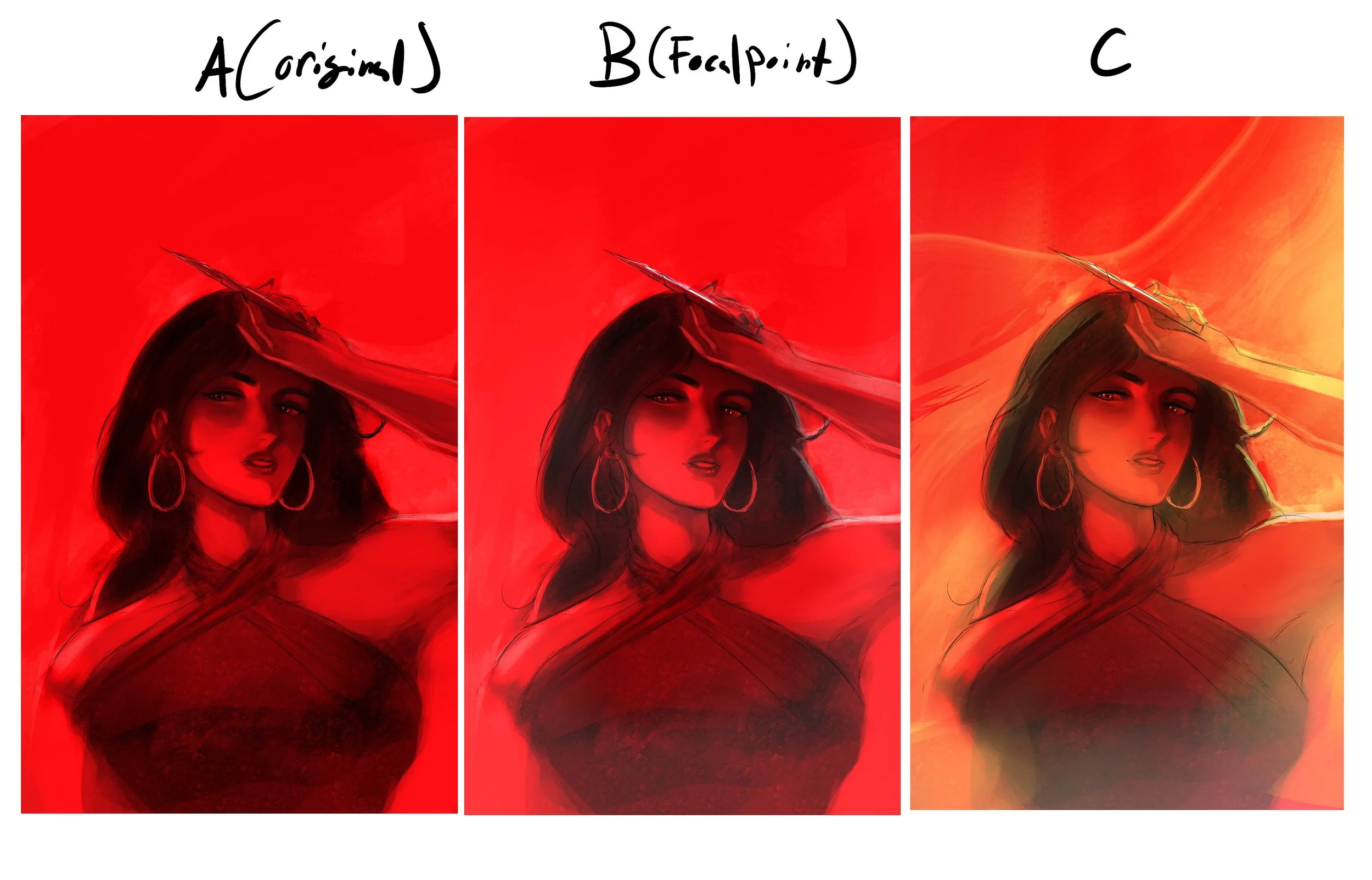
I really enjoyed working with the artist and suggested during the coloring phase to create a more obvious focal point that viewers could look at first. I suggested testing out the eyes or the glint of a scalpel as the focal point. I ultimately decided on the eyes because when Yesenia ‘wakes up,’ she sees her world with new eyes and a new perspective.
Final Cover Art
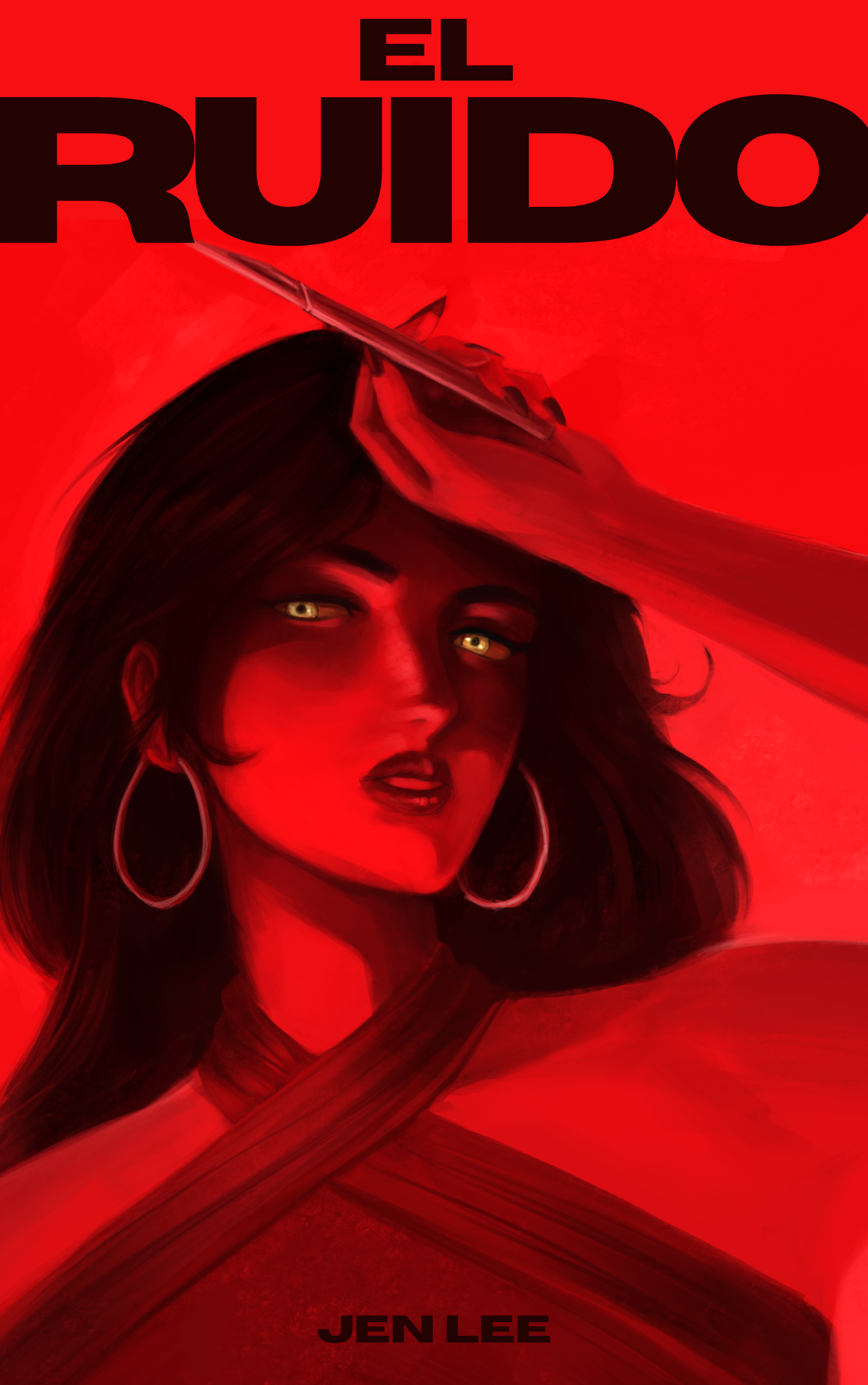
After the art was done, I used Canva to create a book cover with it and used a striking black font that bled off the page for the game’s title. This would be eye-catching, while also creating emotions of peril, drama, and something unsettling.
Reviews and Reception
The best part about submitting to IFComp was the reviews from fellow writers and veteran reviewers in the IntFiction forum! I felt like my narrative design decisions were understood and appreciated by other interactive fiction writers.
“The narrative design, and its exceptionally strong use of meaningful choices, was the highlight of this entry for me. I played through many loops, and it was rewarding to discover just how many endings and possibilities there were to reveal, and how many small choices would make a difference. I also found the sci-fi telenovela setting of the story refreshingly different from anything else I’ve played recently.”
“EVERY LEVEL WORKS LIKE GANGBUSTERS. I was immediately attracted, as I’m sure we all were, to the prospect of SLAPPING THE CRAP out of our co-stars, accompanied by a cutting line of dialogue. All in fabulous hair, wardrobe and makeup. Promises made, promises resoundingly kept!”
“It would be easy for the prose to be so overheated it takes you out of the game, or conversely, so dry that it pushes you out of the mood, but El Ruido deftly occupies the middle space between the two extremes; I always looked forward to the next plot twist, the next outrageous opportunity to show off my malice.”
“The rest of the game is full of interesting thinking about how text-based gameplay can be used to convey a story. For one thing, it’s a gauntlet structure with many many endings, but the endings come when you go too far off-script, usually by killing someone else rather than getting yourself killed. The endings are also designed to gradually unfold a metanarrative, which is a tricky thing to get right, but largely lands.”
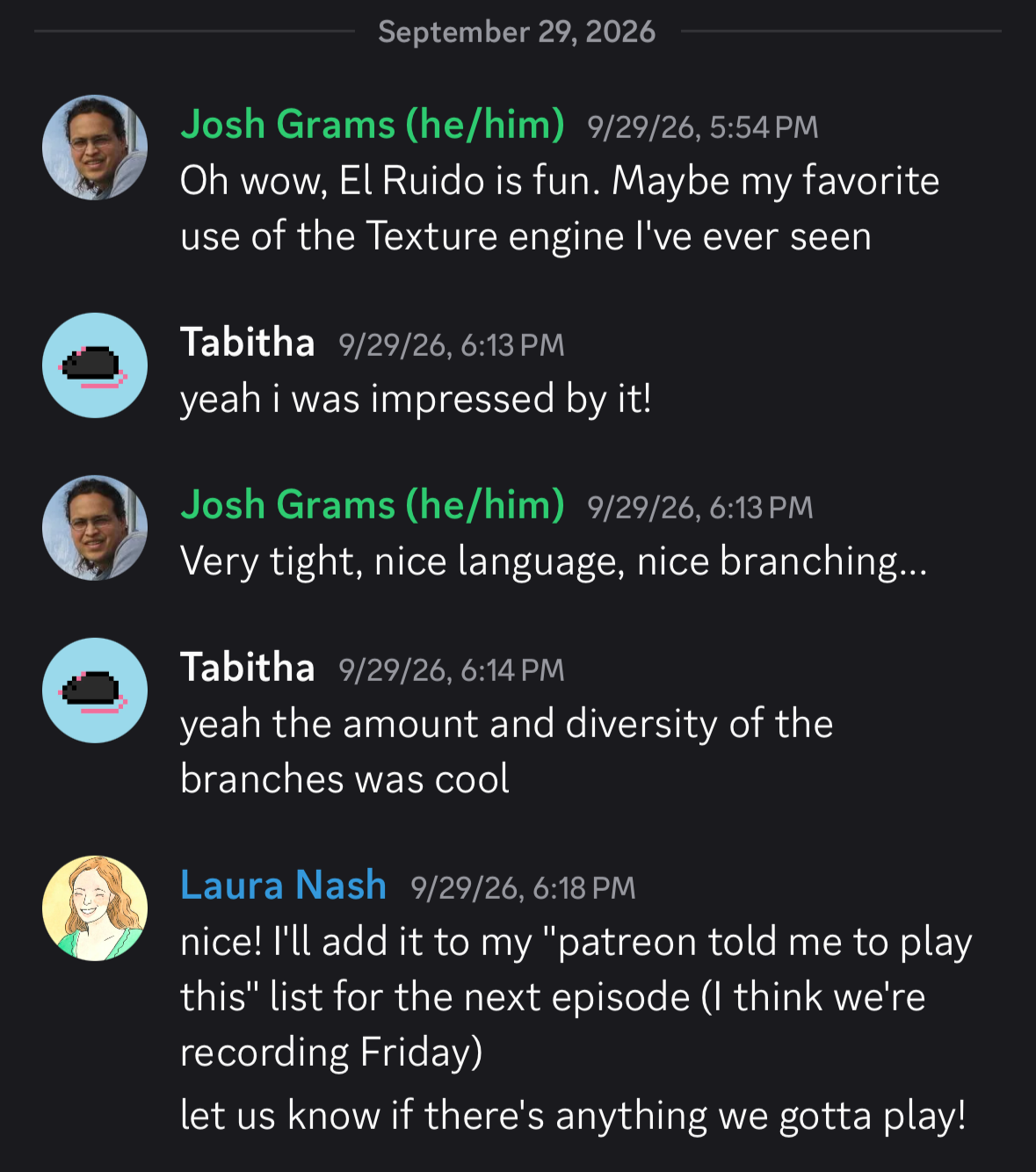
Some writers recommended that the creators of The Short Game Podcast try out my game and discuss it on an upcoming podcast episode about IFComp!
What I Would Do Differently Next Time
Give major narrative beats more room to breathe. I’d slow down the pacing around the story’s biggest reveals and climactic moments, particularly toward the endings. Because so much dramatic development happens in quick succession, I’d consider expanding key scenes, adding another setting or transitional scene, or breaking longer passages into shorter screens so the player has more time to absorb and emotionally sit with each moment.
Find a more polished solution for displaying longer passages. I’d work within Texture’s downloadable HTML to explore better ways of handling passages with larger amounts of text. I’d want to prevent the font from shrinking as text accumulates, since that can create accessibility issues and make longer passages feel more difficult to linger on. Or maybe I’d try to experiment with a scrollbar or other layout solution, while also looking for opportunities to break dense passages into multiple screens, especially when multiple observation texts stack.
Make the importance of looping more explicit. Since Texture doesn’t carry information from one playthrough to the next, I’d want explore other advanced tools like Twine to make repeated play feel more meaningfully cumulative. Ideally, the game could retain information about how the player dies or what they discovered and use that knowledge to unlock more complex branches, situations, or endings in the next playthrough. If I were doing a post-comp release, I’d also consider adding interface cues that more clearly communicate how important it is to hit “Restart” and experience the story again.